How Long Should a Leather Duffle Bag Last?
Realistic lifespans for leather duffles at different quality levels, what wears out first, and how to make a good one last for decades.
Realistic lifespans for leather duffles at different quality levels, what wears out first, and how to make a good one last for decades.
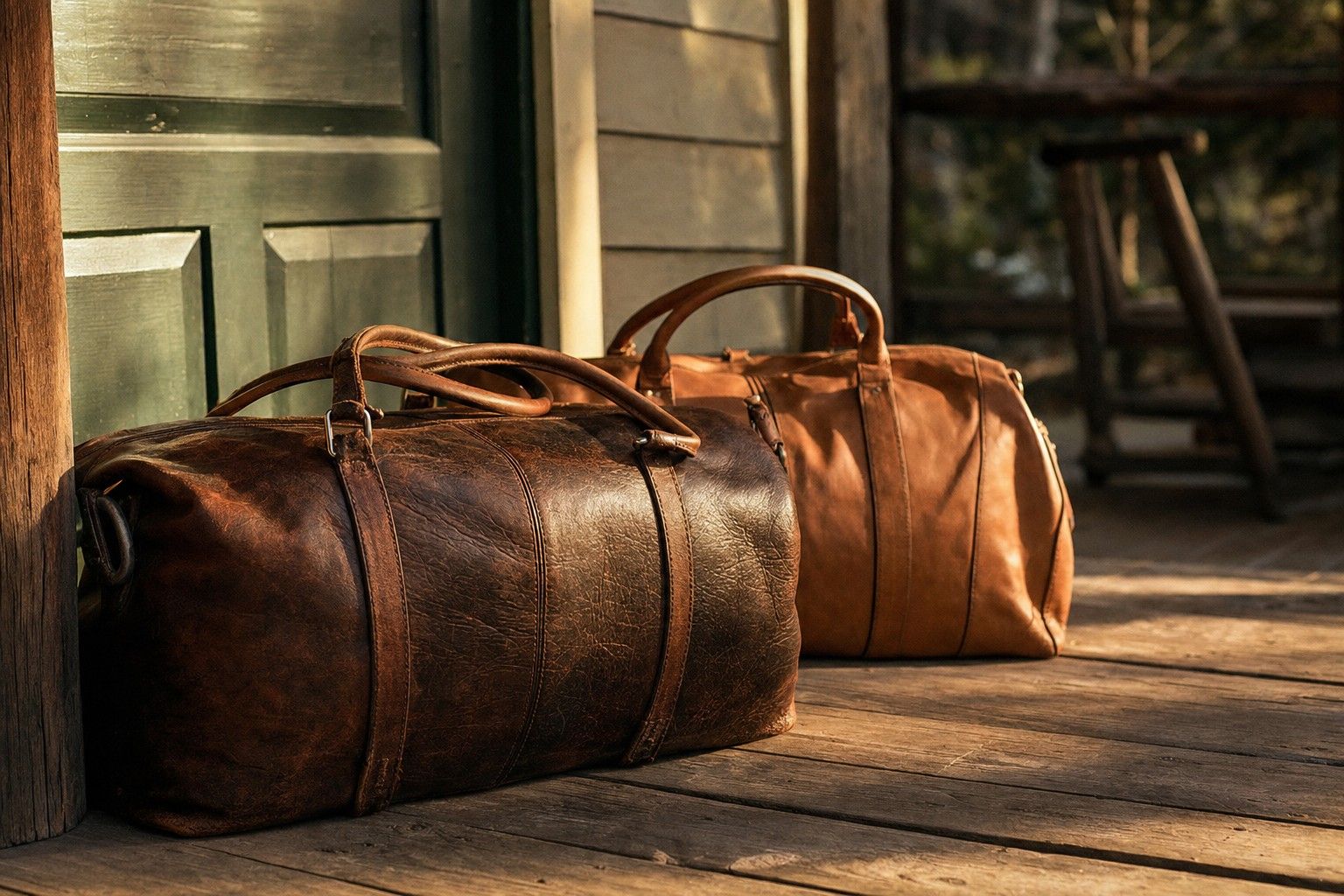
A well-made full grain leather duffle, used regularly and given basic care, should last at least 10 years and often 20 or more. A cheap “genuine leather” or bonded leather bag may last only one to three years. The difference comes down to the quality of the leather and how the bag is put together.
Here’s what to expect, and what you can do about it.
| Bag type | Typical lifespan with regular use |
|---|---|
| Bonded leather (leather scraps glued to a backing) | 1 to 2 years. Peels and cannot be repaired. |
| “Genuine leather” (lower split, coated) | 2 to 5 years. Cracks and wears at folds. |
| Top grain, decent construction | 5 to 10 years |
| Full grain, well constructed | 10 to 20+ years, with repairs |
These are rough estimates rather than guarantees. A bag used every week will age faster than one used for a few trips a year. Not sure what your bag is made of? See full grain vs top grain leather.
On a good leather duffle, the leather is rarely the first thing to go. In rough order, expect:
The good news: almost all of these can be repaired on a full grain bag. Learn to spot strong construction in what makes a travel bag truly well made.
A good leather bag is meant to be repaired, not thrown away.
A few repairs over 20 years usually cost far less than buying several cheaper bags in the same time.
Most of the work is simple and occasional:
Our leather bag care guide walks through each step.
Fix these early. A loose handle is a small job. A handle that rips out fully can tear the leather around it.
At that point, a repair may cost more than the bag is worth.
Buy full grain, check the construction, condition it a couple of times a year, and fix small problems early. Do that, and a leather duffle should still be traveling with you a decade or two from now, looking better than the day you bought it.
For how leather compares with other materials, read leather vs canvas duffles.