Leather grades, explained with photos
Five kinds of leather you'll see on bags, from the best to the one to avoid, and how to tell them apart when the label doesn't.
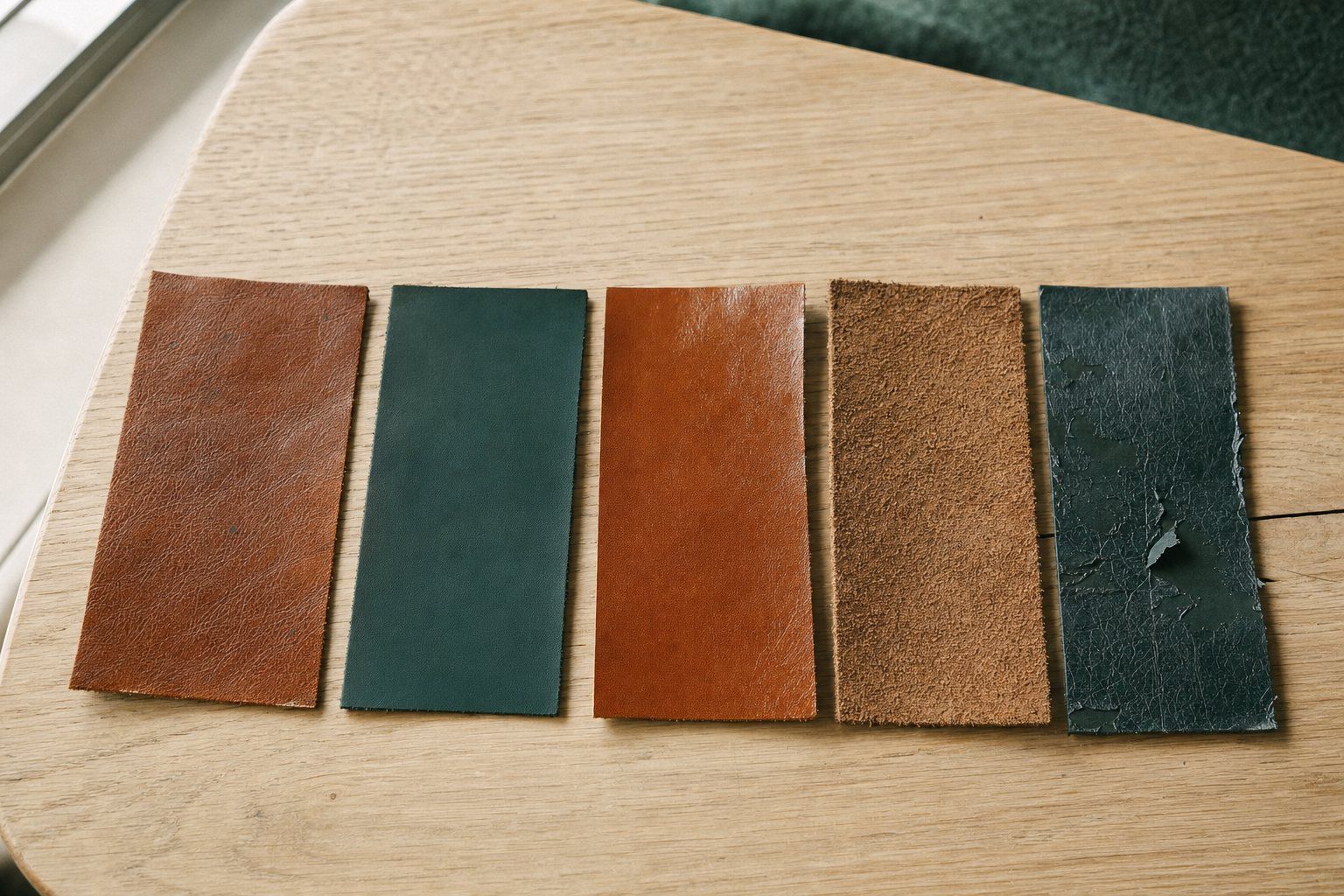
A cowhide is too thick to use whole, so tanneries split it into layers. The top layer holds the grain, the outer surface of the skin, where the fibers are tightest and strongest. Everything below it is weaker. The grade of a leather comes down to two things: which layer it comes from, and how much its surface has been sanded, coated or faked.
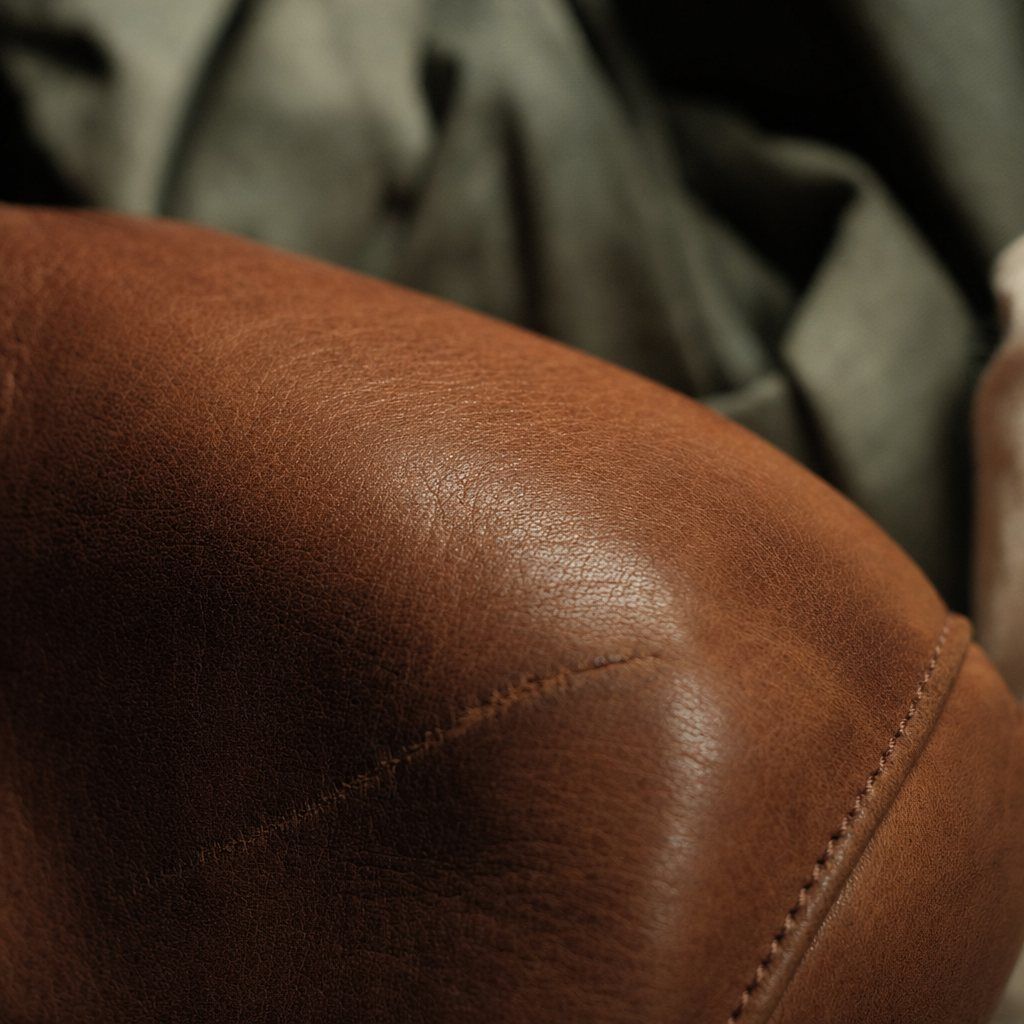
Grade 1 of 5
Full grain
Best for bags
- What it is
- The whole outer surface of the hide, left as it grew. Nothing is sanded off, so pores, wrinkles and small healed scars stay visible.
- How to spot it
- Pores you can see, and small variations from one panel to the next. It feels slightly waxy or oily and warms quickly in your hand.
- On a bag
- The strongest and longest-lasting grade. It darkens and softens with use, and scuffs blend into the patina instead of looking like damage.
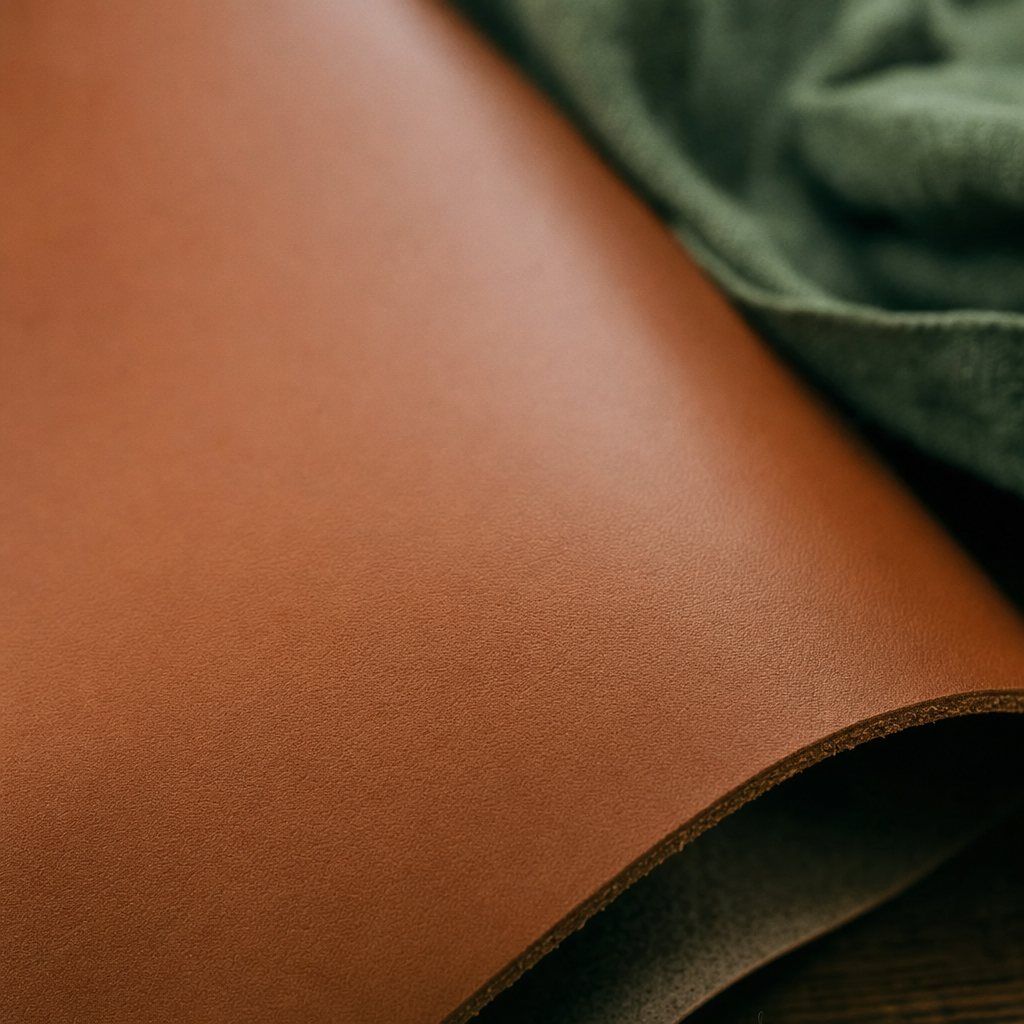
Grade 2 of 5
Top grain
Good, with trade-offs
- What it is
- The same top layer of the hide, but with the very surface lightly sanded to remove marks, then finished with a thin coat.
- How to spot it
- Smooth and even, with faint pores. It looks neater than full grain and the color is more uniform.
- On a bag
- Still a sound leather. It resists stains better when new but ages less gracefully: the finish wears at corners and handles rather than building a patina.
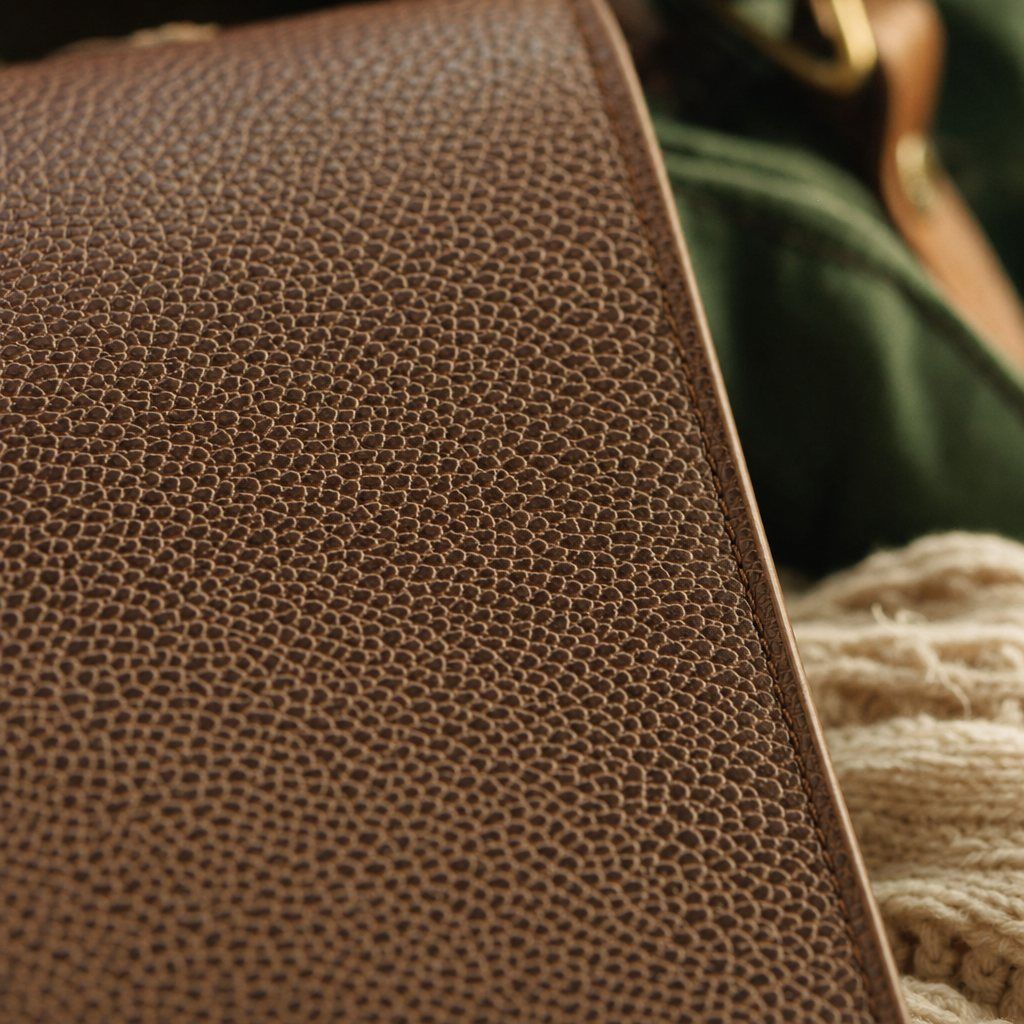
Grade 3 of 5
Corrected grain
Fine for light use
- What it is
- Top-layer leather from lower-quality hides, sanded more heavily, then covered in pigment and stamped with an artificial grain pattern.
- How to spot it
- A pattern that repeats too perfectly, a slightly plastic sheen, and color that sits on top of the leather rather than in it.
- On a bag
- Tough and easy to wipe clean at first. Over time the coating can crack along folds, and it cannot be repaired or conditioned the way natural leather can.
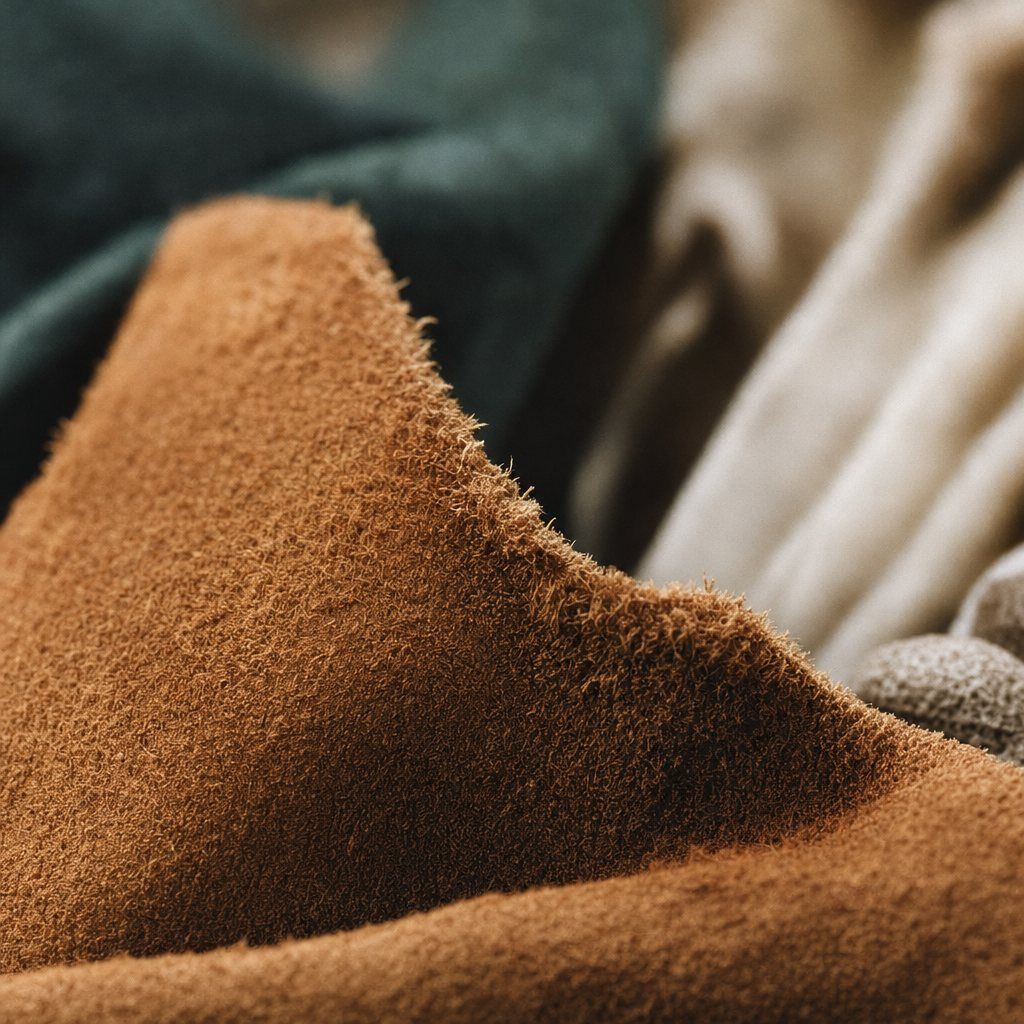
Grade 4 of 5
Split leather and suede
Not for structure
- What it is
- The lower layers of the hide, under the grain. Brushed, it becomes suede. Coated, it is often sold as "genuine leather".
- How to spot it
- Suede is soft and fuzzy on both sides. Coated split has a uniform plastic-like top and a loose, fibrous back.
- On a bag
- Weaker than any grain leather because the fibers are looser. Fine for linings and soft accents, but it stretches and tears at handles and strap points.
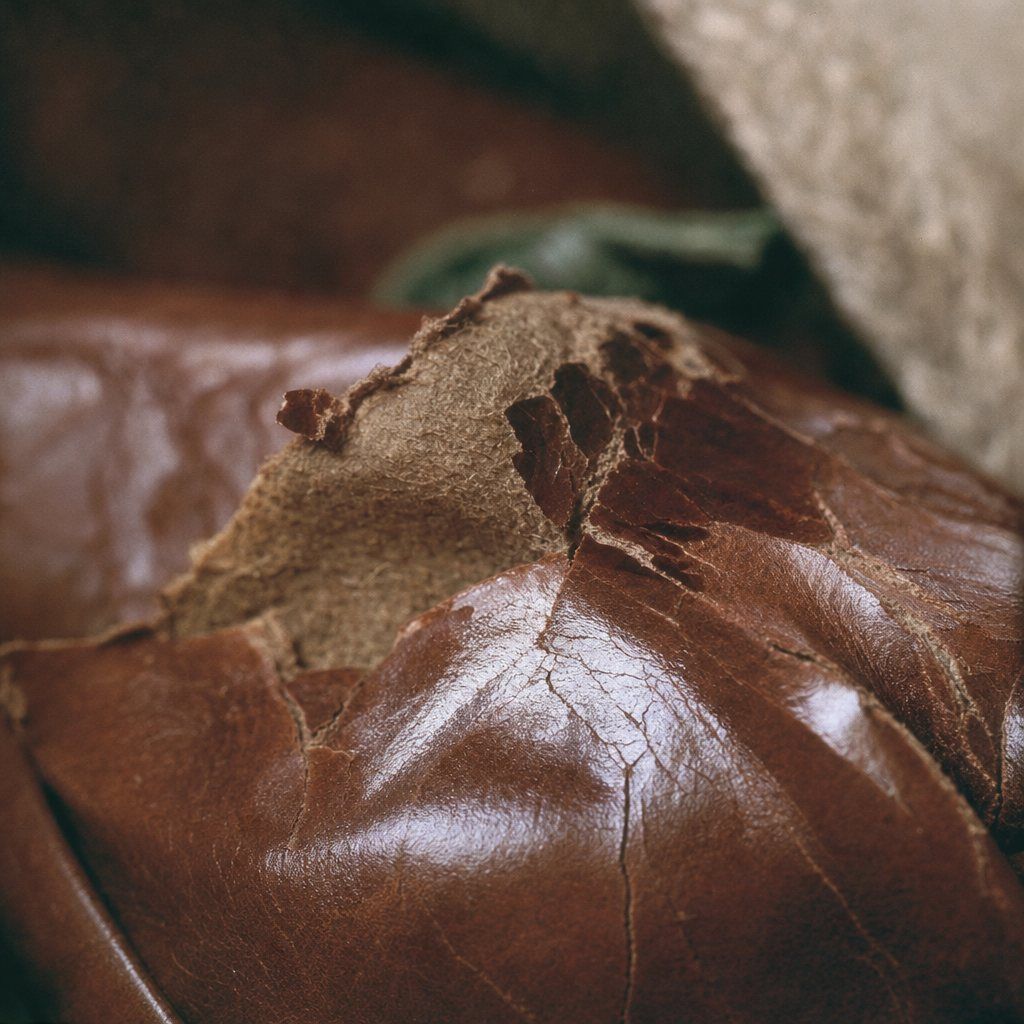
Grade 5 of 5
Bonded leather
Avoid
- What it is
- Leather scraps ground up and glued onto a backing, then coated with polyurethane. It can legally be called leather in many places, but there is very little hide in it.
- How to spot it
- Very low price, a perfectly even shiny surface, and a chemical smell. At worn edges it peels in flakes.
- On a bag
- Peels and cracks within a year or two of regular use. It cannot be repaired. Skip it for anything you plan to carry.
Labels that don't mean much
- "Genuine leather" only promises that some leather is involved. In practice it usually means coated split leather, grade 4 above.
- "Real leather" and "premium leather" have no fixed meaning at all.
- "Made with full grain leather" can mean only some panels are full grain. Ask which parts.
- "Vegan leather" and "PU leather" are plastic, not leather. Some are well made, but they wear very differently from hide.
The quick test in a shop
- Look closely at the surface. Natural pores and small irregularities mean full grain. A perfect repeating pattern means it has been corrected.
- Check a cut edge, often inside a pocket or at a strap end. Grain leather is dense right to the top. A distinct plastic layer on top means a heavy coating.
- Bend a corner. Full grain wrinkles finely and relaxes back. Coated leather forms sharp creases, and bonded leather may crack.
- Ask the seller which tannery the leather comes from. Makers who use good leather are usually glad to tell you.
Which grade for a travel bag?
For a duffle or weekender you want to keep for years, choose full grain. Top grain is a fair choice if you prefer a clean, uniform look or travel only now and then. We go deeper on those two in full grain vs top grain, and our guide to what makes a bag well made covers the stitching and hardware that matter just as much as the leather.